OUR EQUIPMENT
Union Pacific SD40-2 3593 - “Desert Victory”
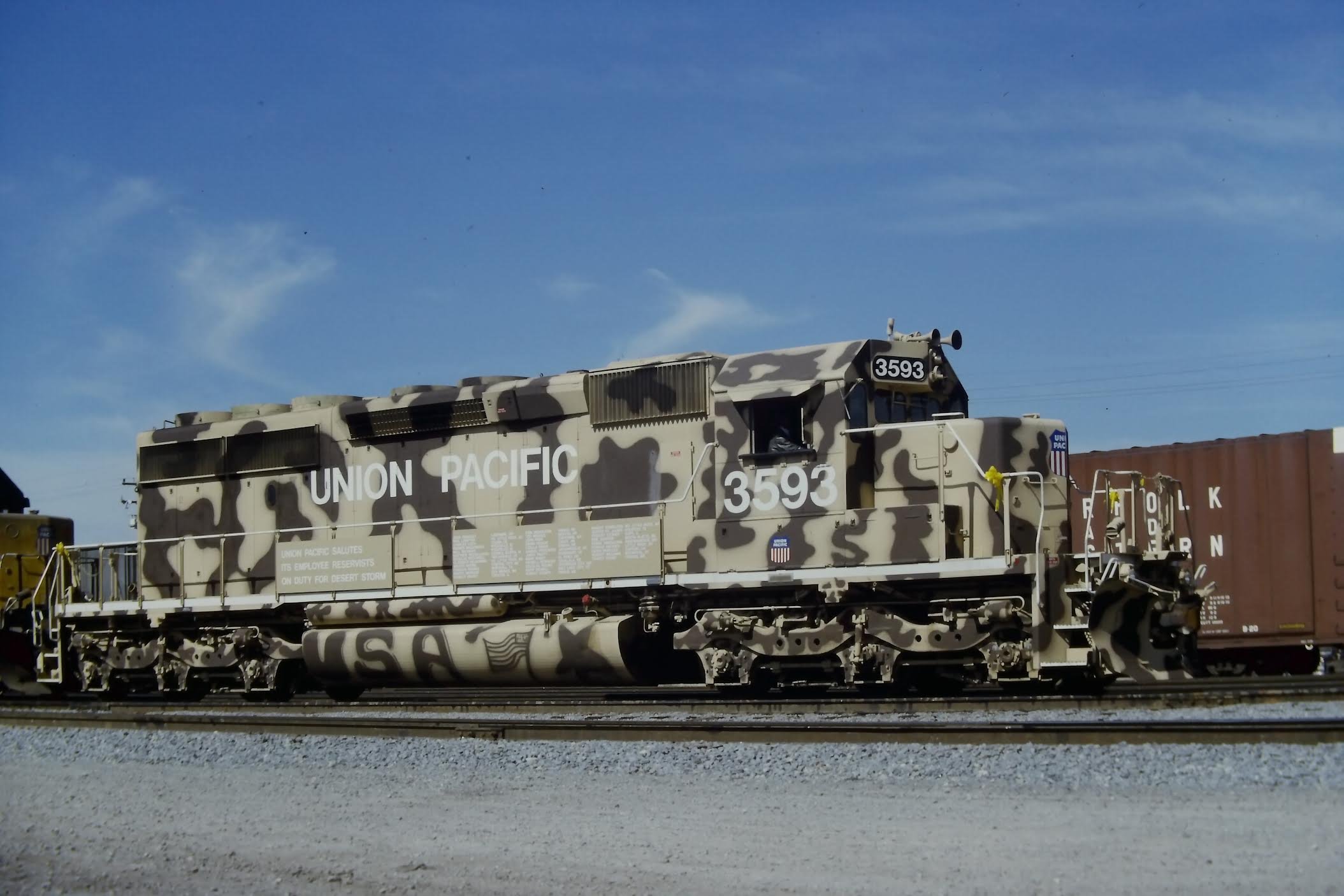
J. Harlen Wilson Photo,
Ian Smith Collection
Union Pacific 3593 - Currently RCP&E 3422
Union Pacific 3593 —famously the Desert Storm commemorative locomotive— is a 3,000-horsepower EMD SD40-2. Built in August of 1979, it was the twentieth of thirty-five SD40-2s from EMD order number 786218 placed by Union Pacific.
The SD40-2 is one of the most successful American locomotive models of all time, with many examples still in service. Its 3,000-horsepower EMD 645-E3 turbocharged prime mover, AR10 main generator, and state-of-the-art "Dash 2" electronics system proved to be a formidable six-axle opponent for competing manufacturers.
Nearly 4,000 examples of the SD40-2 were built between January of 1972 and February of 1986. The model was based on the SD40, featuring a multitude of upgrades including a longer frame, HT-C trucks, and Dash 2 electronics. The Dash 2 system provided a localized, simplified diagnosis of the locomotive's complex electrical system, quickly making it a favorite amongst shop staff.
Following the conclusion of Operation Desert Storm in 1991, Union Pacific elected to honor their employees who answered the call to serve by painting a locomotive. UP 3593, renumbered from 8084, was selected to receive its new scheme via the North Little Rock, AR shops, courtesy of the Arkansas National Guard. Additionally, the engine would receive placards denoting the names and hometowns of each of the sixty-six employees.
As Union Pacific began upgrading locomotives, the 3593 would find its way to Iowa, Chicago and Eastern roster as the 6426. Eventually, the locomotive would be acquired by the Rapid City, Pierre and Eastern and renumbered to 3422.
The locomotive was kindly donated by the Rapid City, Pierre and Eastern Railroad as an effort to preserve a key piece of American industrial and military history. We at American Heartland Railroad Society are extremely thankful for the opportunity put forth to us by RCP&E and their parent company, Genesee and Wyoming.
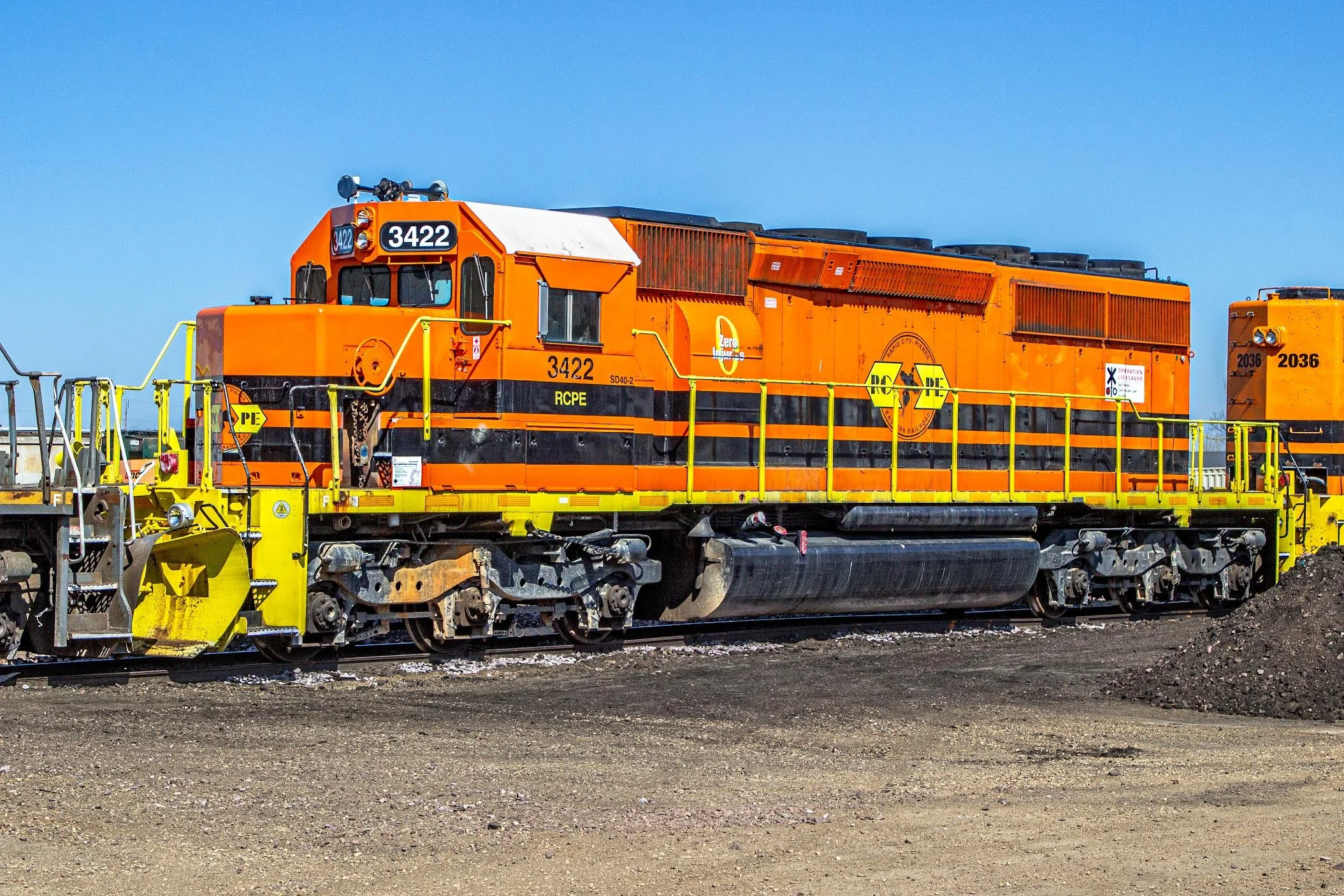
Ross Hereen Photo
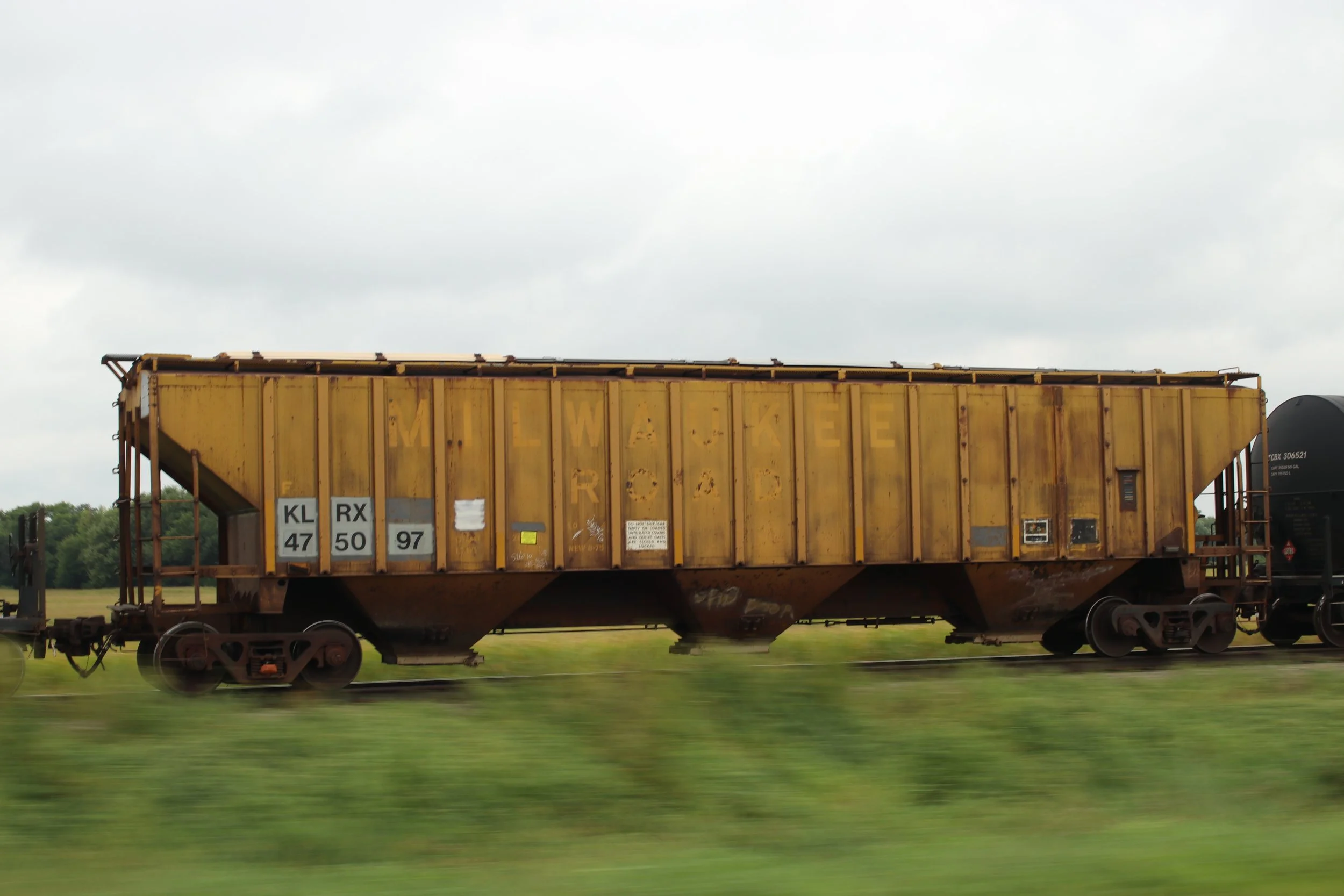
Pullman Standard 4750 Covered Hopper — MILW 101567
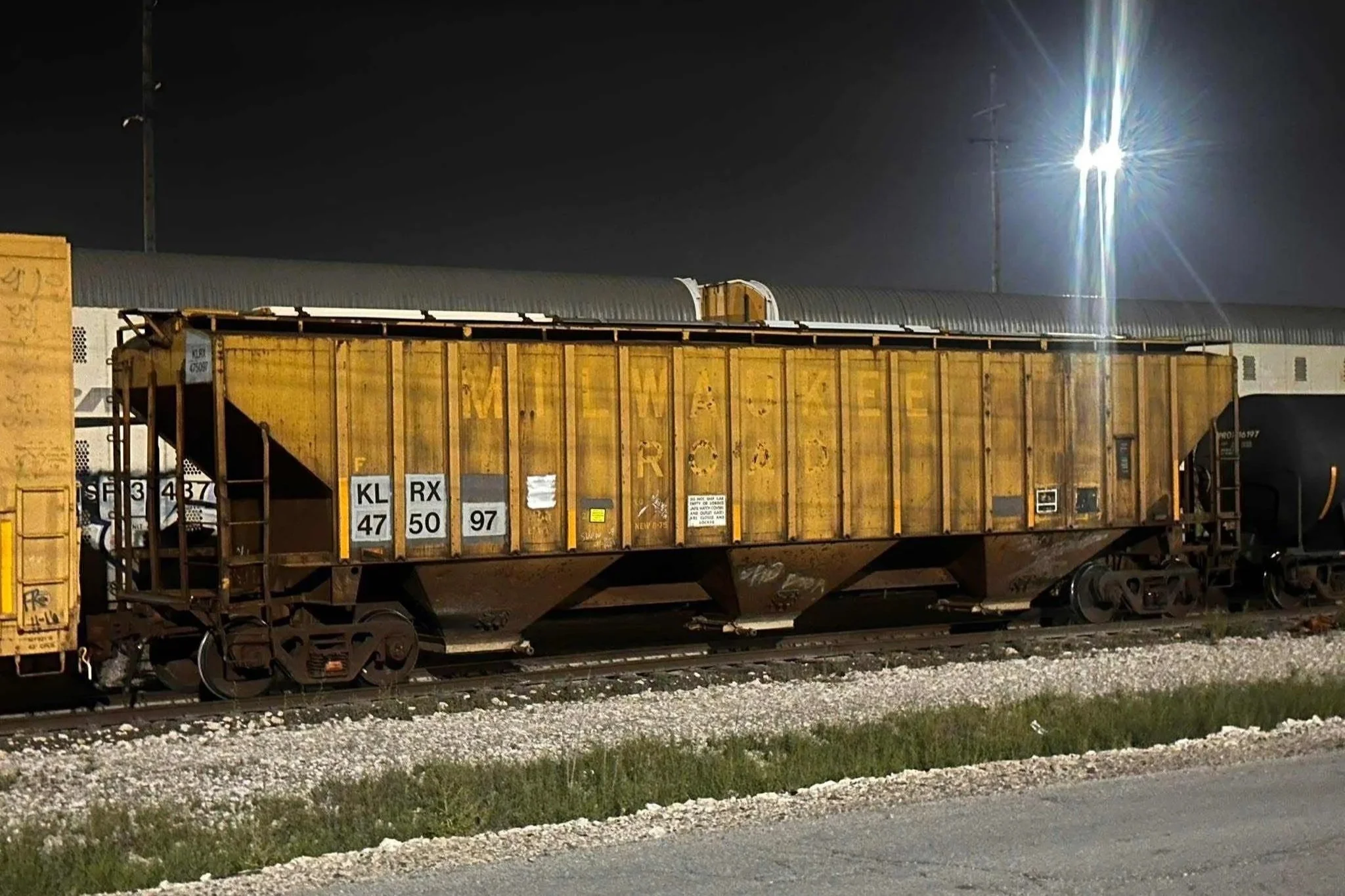
Parker Presley Photo
Milwaukee Road 101567 - Currently KLRX 475097
Milwaukee Road 101567 is a 4,750 cubic foot capacity covered hopper. Built in August of 1975 at Pullman-Standard’s Butler, PA shops, the car was one of 196 in what would be the final new covered hopper order placed by the Milwaukee Road.
Covered hoppers were developed to transport grain, sugar, and other fine, dry commodities that require protection from the elements. One of the most iconic examples of this type is the 4750 cubic foot covered hopper, named for its internal volume capacity.
Introduced in 1972, the 4750 design quickly became one of the most popular and successful covered hopper models of the 20th century. Over 56,000 units were built between 1972 and 1981, serving a wide range of agricultural and industrial needs across North America.
MILW 101567 represents the second known operationally preserved example of the 4750 covered hopper, helping to ensure this important piece of railroading history remains visible and functional for future generations.
This car was generously donated by KBX Logistics, marking the first piece of rolling stock in our collection. We’re incredibly grateful to KBX Logistics for their help and support in securing the car, which had originally been slated for scrapping at a facility near Kansas City, KS.
Ty Smith Photo